How to Create Content that Converts Visitors into Customers in 2026
Are you pouring your heart, soul, and budget into content that generates clicks and traffic but fails to move the needle on what truly matters—sales, signups, and loyal customers? It’s a frustratingly common story. In my 10+ years as an SEO and content strategist, the biggest mistake I see businesses make is chasing vanity metrics. They celebrate a traffic spike while their conversion rate flatlines.
Listen, traffic is great, but it doesn’t pay the bills. Revenue-generating content does. This isn’t just another “ultimate guide.” This is a step-by-step tutorial designed to fundamentally shift your approach from creating content that ranks to crafting content that converts. We’re going to build a repeatable system that turns your blog and website into your most effective salesperson.
In this comprehensive tutorial, we’ll walk through the exact process I use with clients to build a powerful SEO content strategy. You’ll learn how to master user intent, uncover high-converting keywords that your competitors are ignoring, structure your articles for maximum impact, and leverage proven copywriting techniques that drive action. Let’s stop writing for search engines and start writing for people who buy.
The Foundation: Understanding User Intent and the Buyer’s Journey
Before we write a single word, we have to get inside our customer’s head. High-converting content isn’t created by accident; it’s engineered. It starts with a deep understanding of who you’re talking to and where they are in their decision-making process. The most brilliant copy in the world will fail if it’s delivered to the wrong person at the wrong time.
Decoding Search Intent: Informational vs. Commercial vs. Transactional
Search intent is the ‘why’ behind a search query. It’s the most critical signal for creating performance content marketing. Broadly, it falls into three categories relevant to conversion:
- Informational: The user wants to learn something. (e.g., “what is conversion copywriting?”)
- Commercial: The user is researching products or services to solve a problem. (e.g., “best keyword research tools”)
- Transactional: The user is ready to buy. (e.g., “semrush pro plan pricing”)
Your goal is to create content that perfectly matches the intent. Trying to hard-sell a product in an informational article is like proposing on a first date—it’s just too soon.
Mapping Content to the Three Stages of the Buyer’s Journey
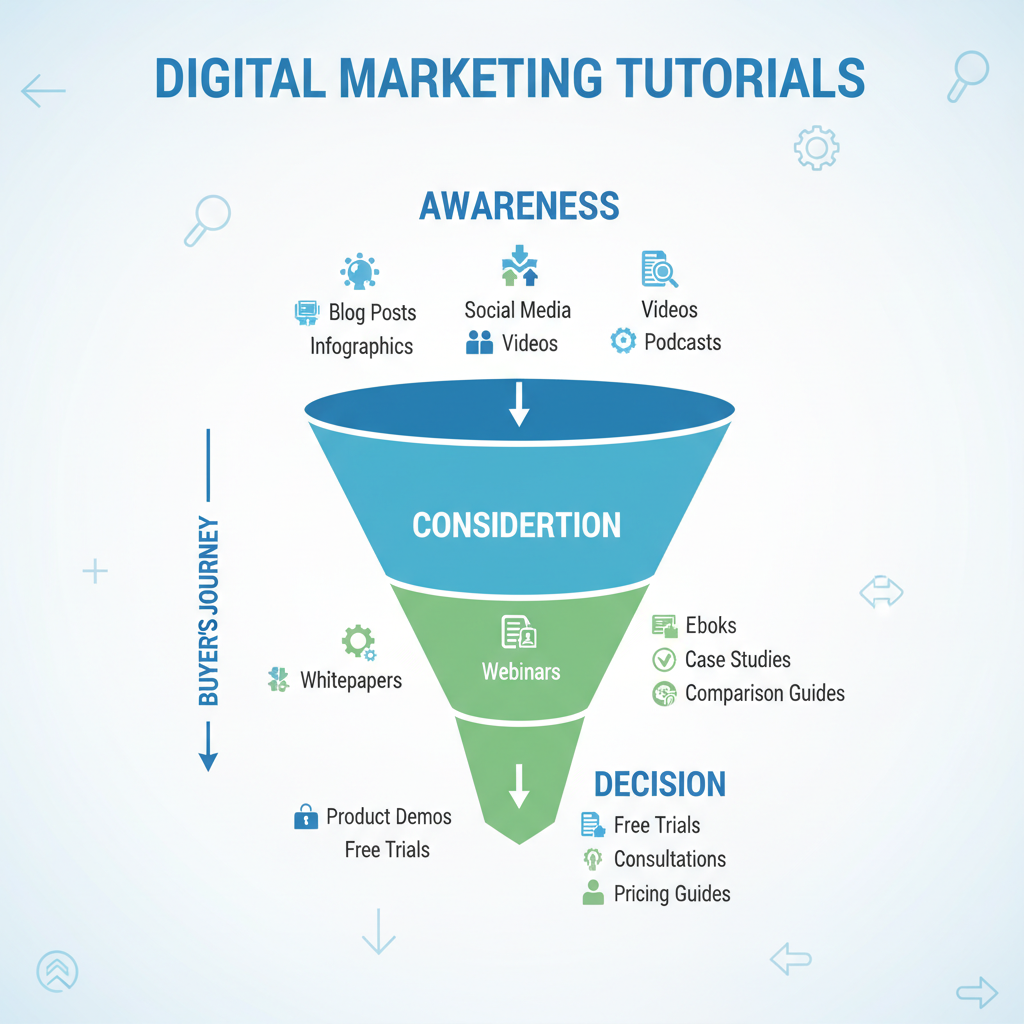
The buyer journey maps the path a potential customer takes. Creating content for each stage is crucial for lead nurturing and guiding them toward a purchase.
- Awareness (Top of Funnel): The prospect is experiencing a problem but might not know how to name it. They’re looking for answers and education. Your content here should be informational blog posts, guides, and ebooks.
- Consideration (Middle of Funnel): The prospect has defined their problem and is now researching solutions. This is where you create comparison articles, case studies, and webinars that position your offering as the best choice.
- Decision (Bottom of Funnel): The prospect is ready to choose a solution. Content here includes product pages, free trials, demos, and testimonials. This is where your conversion-focused content shines brightest.
Identifying and Leveraging Customer Pain Points
What keeps your ideal customer up at night? What are their biggest frustrations and challenges? Content that converts speaks directly to these pain points. Don’t just list features; explain how your product or service alleviates their specific pain. Dig into forums like Reddit, Quora, and customer reviews to find the exact language your audience uses to describe their problems.
Step 1: Advanced Keyword Intelligence for Conversion-Focused Topics
The foundation is set. Now, let’s find the exact phrases people use when they’re close to making a decision. This is where we move beyond vanity metrics and focus on creating an SEO content strategy built for business results.
Moving Beyond High-Volume Keywords to High-Intent Phrases
A keyword like “content marketing” has massive volume, but the user intent is broad. In contrast, a long-tail keyword like “how to create b2b saas content that converts” has much lower volume but signals a user who is deep in the consideration phase and actively looking for a solution. From my perspective, focusing on these high-intent phrases is the fastest path to generating qualified organic traffic.
Uncovering Long-Tail Keywords That Signal Purchase Intent
Look for keyword modifiers that suggest commercial or transactional intent. These are buying signals:
- Comparisons: “vs,” “alternative,” “compare” (e.g., “ahrefs vs semrush”)
- Cost-Related: “pricing,” “cost,” “cheap,” “affordable”
- Solution-Oriented: “software,” “tool,” “service,” “agency”
- Location-Based: “near me,” “[city name]”
A 2024 analysis by Backlinko found that long-tail keywords have a 3% to 5% higher click-through rate than generic searches, which often correlates with higher conversion rates.
Mining “People Also Ask” and Forums for Untapped Opportunities
Google’s “People Also Ask” (PAA) boxes are a goldmine for understanding customer pain points. These are the real questions your audience is asking. Similarly, platforms like Reddit and industry-specific forums provide raw, unfiltered insights into the challenges your prospects face. Use these to find keywords that your martech tools might miss.
Step 2: Structuring Your Content for Readability and SEO Dominance
You’ve found the perfect topic. Now, you need to present it in a way that hooks the reader, satisfies search engines, and guides them seamlessly toward the conversion goal.
The Anatomy of a High-Converting Blog Post
Think of your article like a well-designed sales page. Every element has a purpose:
- Headline: Grabs attention and promises a solution.
- Introduction: Hooks the reader, agitates the problem, and presents your value proposition.
- Body: Delivers on the promise with scannable, valuable information, building trust along the way.
- Conclusion: Summarizes the key points and directs the reader to the next logical step.
- Call-to-Action (CTA): The final push that asks for the conversion.
Crafting Compelling Headlines That Demand to Be Clicked
Your headline is your first—and sometimes only—chance to make an impression. It must be specific, promise a clear benefit, and create a sense of urgency or curiosity. Use numbers, ask questions, and speak directly to the reader’s problem. “10 Steps to Create Content that Converts” is good; “A Proven 7-Step Tutorial to Turn Readers Into Customers” is better because it’s more specific and promises a transformative result.
Using Headings (H2, H3), Short Paragraphs, and Bullet Points
Nobody reads dense walls of text online. We scan. According to a landmark study by the Nielsen Norman Group, 79% of web users scan any new page they come across. Break up your content to make it digestible:
- Use clear, descriptive H2 and H3 headings.
- Keep paragraphs to 2-3 sentences max.
- Use bullet points and numbered lists to highlight key information.
- Use bold text to emphasize important concepts.
Step 3: The Art of Persuasive Writing: Crafting Copy That Sells
This is where the magic happens. It’s time to infuse your structured, SEO-optimized content with persuasive conversion copywriting techniques that build connection and inspire action.
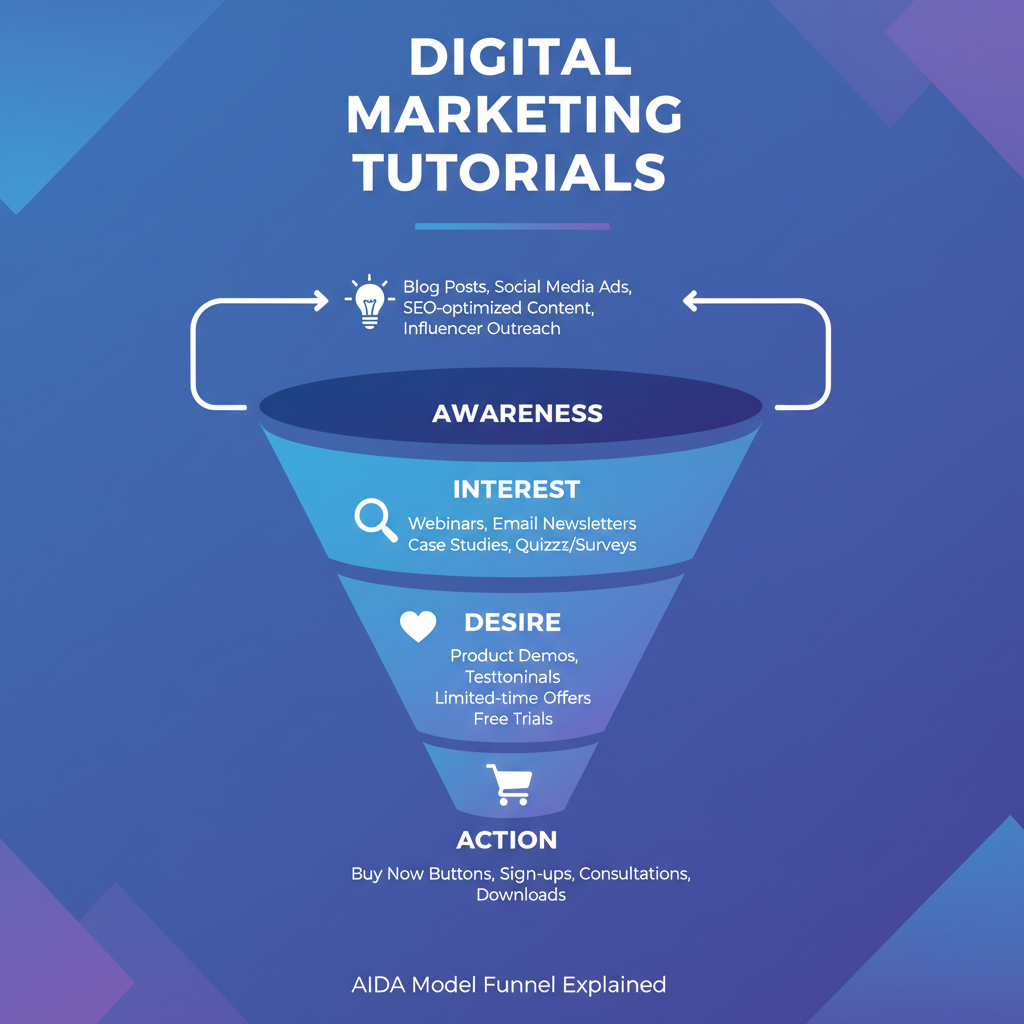
The AIDA Model in Action: Attention, Interest, Desire, Action
The AIDA model is a classic copywriting framework that’s perfect for structuring your content:
- Attention: Grab them with your powerful headline and hook.
- Interest: Hold their interest by sharing relatable stories, fascinating facts, and identifying their pain points.
- Desire: Create desire by showing them what’s possible. Paint a picture of their life after their problem is solved by your solution.
- Action: Clearly tell them what to do next with a compelling Call to Action (CTA).
Writing to a Single Person: The Power of “You” and “Your”
Stop writing for “an audience.” Write for one person. Picture your ideal customer and write directly to them. Use the words “you” and “your” frequently. This simple shift makes your writing feel personal and conversational, which is essential for building the trust needed for a conversion.
Using LSI Keywords Naturally to Enhance SEO and Readability
Remember that “Keyword Arsenal”? Now is the time to weave in those LSI (Latent Semantic Indexing) keywords like “customer pain points,” “buyer journey,” and “lead generation.” Don’t force them. Use them naturally to add context and depth to your writing. This tells search engines you’re covering the topic comprehensively and improves the overall quality of your content.
Step 4: Building Trust and Authority with E-E-A-T and Social Proof
People buy from businesses they trust. In the world of SEO, Google formalizes this concept with its E-E-A-T guidelines. Your content must demonstrate why you are a credible source of information.
Demonstrating Experience, Expertise, Authoritativeness, and Trustworthiness (E-E-A-T)
To create content that builds trust, you must:
- Show, don’t tell: Instead of saying “we are experts,” share specific case studies or personal experiences.
- Cite your sources: Link out to authoritative studies, reports, and industry leaders.
- Author bios: Include clear author information with credentials.
- Be transparent: Acknowledge limitations and present information fairly.
The Power of Testimonials, Case Studies, and User-Generated Content
Social proof is one of the most powerful psychological triggers for conversion. Let others sell for you. Sprinkle relevant testimonials and case studies throughout your content. Quoting a happy customer saying, “This strategy increased our leads by 150%,” is far more powerful than you making the same claim.
Step 5: The Conversion Catalyst: Irresistible Calls-to-Action (CTAs)
You’ve done all the hard work. You’ve attracted the right user, built trust, and created desire. The call to action is the final step that turns a passive reader into an active lead or customer. Don’t let it be an afterthought.
Writing Clear, Action-Oriented CTA Copy
Weak CTAs like “Click Here” or “Submit” won’t cut it. Your CTA copy needs to be specific and benefit-driven. Instead of “Download Now,” try “Get Your Free Conversion Checklist.” Instead of “Contact Us,” try “Request a Free Strategy Call.” Use strong action verbs and tell the user exactly what they’ll get.
Designing CTAs That Stand Out and Drive Clicks
Your CTA button should be impossible to miss. Use a contrasting color that pops against the background of your page. Ensure there’s plenty of white space around it. The best practice, supported by countless A/B tests, is to make your CTA look like a clickable button. A 2025 report from HubSpot confirmed that button-style CTAs outperform text-link CTAs by as much as 45%.
Step 6: Optimizing for the User Experience (UX) to Maximize Conversions
A poor user experience can kill your conversion rate, no matter how great your content is. If your site is slow, hard to read on mobile, or difficult to navigate, users will leave. UX and conversion are intrinsically linked.
The Role of Visual Content: Images, Videos, and Infographics
Visuals break up text, increase engagement, and can explain complex concepts more effectively than words alone. Use relevant, high-quality images, screenshots, and custom infographics to support your points. I’ve seen firsthand how embedding a short explainer video can double the time on page for a critical article.
Ensuring Mobile-Friendliness for On-the-Go Readers
Over 60% of web traffic now comes from mobile devices, according to data from Statista’s 2025 Mobile Economy Report. Your content must be perfectly readable and navigable on a small screen. This means responsive design, large fonts, and easily tappable buttons. Test your pages on your own phone before you hit publish.
Step 7: Measuring and Iterating: The Data-Driven Path to Higher Conversions
Creating content that converts isn’t a “set it and forget it” activity. It’s a process of continuous improvement fueled by data. What I find particularly interesting is how many marketers skip this final, crucial step.
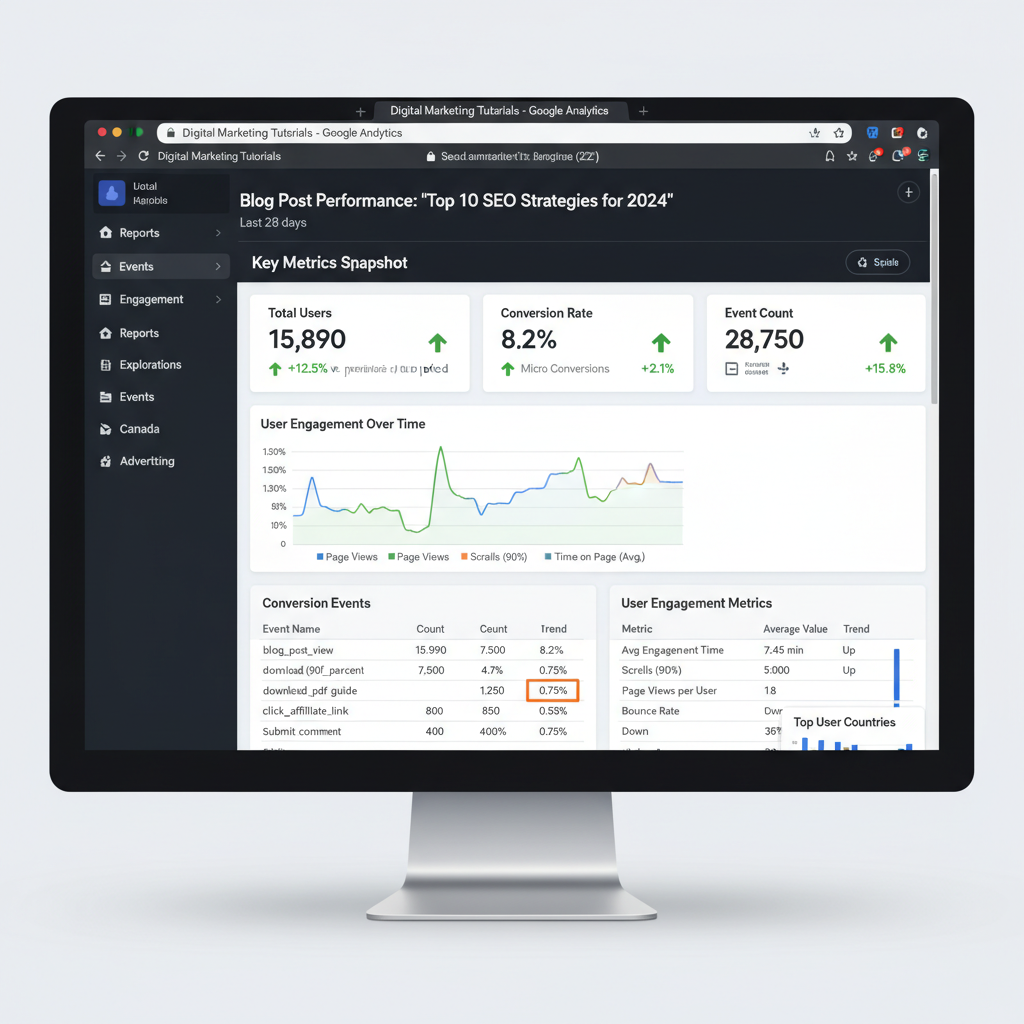
Key Metrics to Track
Go beyond pageviews. Focus on metrics that indicate engagement and conversion:
- Conversion Rate: The percentage of visitors who complete your desired action.
- Time on Page: How long are people actually reading your content?
- Scroll Depth: How far down the page do users get? Are they seeing your CTAs?
- Click-Through Rate (on internal links/CTAs): Are people moving deeper into your funnel?
The Importance of A/B Testing Your Content and CTAs
Don’t guess what works—test it. Use tools to A/B test different headlines, CTA copy, button colors, and even article introductions. A small change, like altering one word in your headline, can lead to a significant lift in conversions. Let the data guide your optimization efforts.
Frequently Asked Questions About Content Conversion
How do you write content that converts?
You write content that converts by deeply understanding your audience’s pain points and search intent, structuring the content for scannability, using persuasive copywriting frameworks like AIDA, building trust with social proof and E-E-A-T signals, and finishing with a clear, compelling call-to-action.
What are the key elements of high-converting content?
The key elements are: a benefit-driven headline, an empathetic introduction, scannable body copy that solves a problem, credible evidence (stats, testimonials), strategically placed visuals, and a low-friction, high-value call-to-action.
How do you measure content conversion?
You measure content conversion using web analytics tools like Google Analytics. You set up specific goals or “conversion events” (e.g., a form submission, a download, or a purchase) and track the percentage of visitors from a specific piece of content who complete that action. This is your content conversion rate.
Why is understanding search intent crucial for conversion?
Search intent tells you the user’s goal. If you misalign your content with their intent (e.g., trying to sell to someone who just wants information), you create friction and lose their trust. Matching intent ensures you’re providing the right value at the right time, which is the foundation of conversion.
How do long-tail keywords improve conversion rates?
Long-tail keywords (3+ words) are highly specific. A person searching for “best running shoes for flat feet” is much closer to buying than someone searching for “shoes.” By targeting these specific phrases, you attract a more qualified audience that is further along in the buyer journey, leading to naturally higher conversion rates.
Your Blueprint for Results-Driven Content
Key Takeaways
- Start with Intent: Before anything else, master the user’s search intent and map your content to the buyer’s journey.
- Target Buying Keywords: Focus on long-tail keywords that signal commercial or transactional intent to attract qualified traffic.
- Structure for Scannability: Use clear headings, short paragraphs, and lists to make your content easy to digest.
- Write to Persuade, Not Just Inform: Employ copywriting techniques like the AIDA model and write directly to a single person.
- Build Unshakeable Trust: Leverage social proof and E-E-A-T principles to establish your authority and credibility.
- Measure and Optimize: Don’t guess. Use data and A/B testing to continuously improve your content’s performance.
Creating content that converts is a science, not an art. It’s a deliberate, strategic process that prioritizes the reader’s needs and guides them toward a solution. The days of writing content just to fill a calendar are over. By implementing the steps in this tutorial, you’re not just creating blog posts; you’re building powerful assets for your business.
The next step is to take action. Pick one piece of existing content and audit it against this framework. Or, use this blueprint for the very next article you write. The journey from traffic-generator to conversion-machine starts now.