The post Content that Converts: A Step-by-Step Tutorial appeared first on Petlg.
]]>
How to Create Content that Converts Visitors into Customers in 2026
Are you pouring your heart, soul, and budget into content that generates clicks and traffic but fails to move the needle on what truly matters—sales, signups, and loyal customers? It’s a frustratingly common story. In my 10+ years as an SEO and content strategist, the biggest mistake I see businesses make is chasing vanity metrics. They celebrate a traffic spike while their conversion rate flatlines.
Listen, traffic is great, but it doesn’t pay the bills. Revenue-generating content does. This isn’t just another “ultimate guide.” This is a step-by-step tutorial designed to fundamentally shift your approach from creating content that ranks to crafting content that converts. We’re going to build a repeatable system that turns your blog and website into your most effective salesperson.
In this comprehensive tutorial, we’ll walk through the exact process I use with clients to build a powerful SEO content strategy. You’ll learn how to master user intent, uncover high-converting keywords that your competitors are ignoring, structure your articles for maximum impact, and leverage proven copywriting techniques that drive action. Let’s stop writing for search engines and start writing for people who buy.
The Foundation: Understanding User Intent and the Buyer’s Journey
Before we write a single word, we have to get inside our customer’s head. High-converting content isn’t created by accident; it’s engineered. It starts with a deep understanding of who you’re talking to and where they are in their decision-making process. The most brilliant copy in the world will fail if it’s delivered to the wrong person at the wrong time.
Decoding Search Intent: Informational vs. Commercial vs. Transactional
Search intent is the ‘why’ behind a search query. It’s the most critical signal for creating performance content marketing. Broadly, it falls into three categories relevant to conversion:
- Informational: The user wants to learn something. (e.g., “what is conversion copywriting?”)
- Commercial: The user is researching products or services to solve a problem. (e.g., “best keyword research tools”)
- Transactional: The user is ready to buy. (e.g., “semrush pro plan pricing”)
Your goal is to create content that perfectly matches the intent. Trying to hard-sell a product in an informational article is like proposing on a first date—it’s just too soon.
Mapping Content to the Three Stages of the Buyer’s Journey
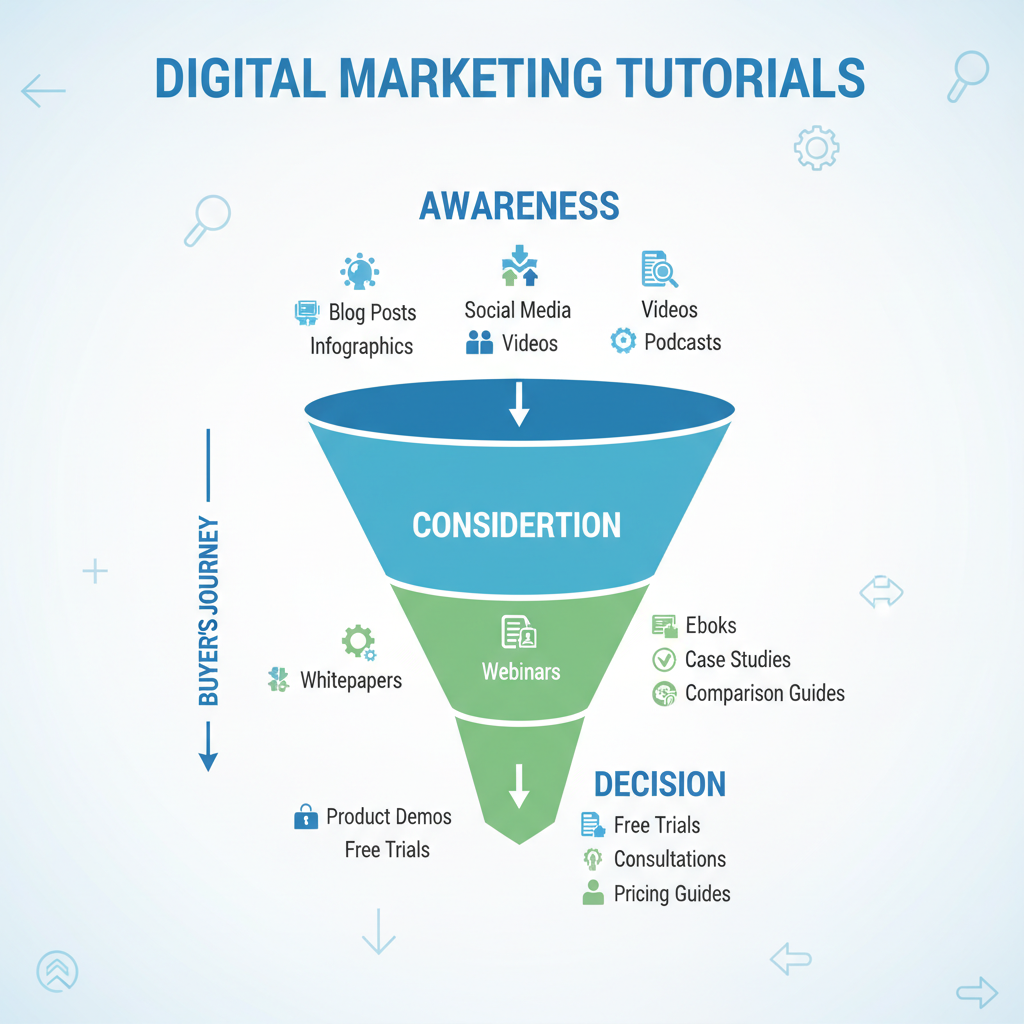
The buyer journey maps the path a potential customer takes. Creating content for each stage is crucial for lead nurturing and guiding them toward a purchase.
- Awareness (Top of Funnel): The prospect is experiencing a problem but might not know how to name it. They’re looking for answers and education. Your content here should be informational blog posts, guides, and ebooks.
- Consideration (Middle of Funnel): The prospect has defined their problem and is now researching solutions. This is where you create comparison articles, case studies, and webinars that position your offering as the best choice.
- Decision (Bottom of Funnel): The prospect is ready to choose a solution. Content here includes product pages, free trials, demos, and testimonials. This is where your conversion-focused content shines brightest.
Identifying and Leveraging Customer Pain Points
What keeps your ideal customer up at night? What are their biggest frustrations and challenges? Content that converts speaks directly to these pain points. Don’t just list features; explain how your product or service alleviates their specific pain. Dig into forums like Reddit, Quora, and customer reviews to find the exact language your audience uses to describe their problems.
Step 1: Advanced Keyword Intelligence for Conversion-Focused Topics
The foundation is set. Now, let’s find the exact phrases people use when they’re close to making a decision. This is where we move beyond vanity metrics and focus on creating an SEO content strategy built for business results.
Moving Beyond High-Volume Keywords to High-Intent Phrases
A keyword like “content marketing” has massive volume, but the user intent is broad. In contrast, a long-tail keyword like “how to create b2b saas content that converts” has much lower volume but signals a user who is deep in the consideration phase and actively looking for a solution. From my perspective, focusing on these high-intent phrases is the fastest path to generating qualified organic traffic.
Uncovering Long-Tail Keywords That Signal Purchase Intent
Look for keyword modifiers that suggest commercial or transactional intent. These are buying signals:
- Comparisons: “vs,” “alternative,” “compare” (e.g., “ahrefs vs semrush”)
- Cost-Related: “pricing,” “cost,” “cheap,” “affordable”
- Solution-Oriented: “software,” “tool,” “service,” “agency”
- Location-Based: “near me,” “[city name]”
A 2024 analysis by Backlinko found that long-tail keywords have a 3% to 5% higher click-through rate than generic searches, which often correlates with higher conversion rates.
Mining “People Also Ask” and Forums for Untapped Opportunities
Google’s “People Also Ask” (PAA) boxes are a goldmine for understanding customer pain points. These are the real questions your audience is asking. Similarly, platforms like Reddit and industry-specific forums provide raw, unfiltered insights into the challenges your prospects face. Use these to find keywords that your martech tools might miss.
Step 2: Structuring Your Content for Readability and SEO Dominance
You’ve found the perfect topic. Now, you need to present it in a way that hooks the reader, satisfies search engines, and guides them seamlessly toward the conversion goal.
The Anatomy of a High-Converting Blog Post
Think of your article like a well-designed sales page. Every element has a purpose:
- Headline: Grabs attention and promises a solution.
- Introduction: Hooks the reader, agitates the problem, and presents your value proposition.
- Body: Delivers on the promise with scannable, valuable information, building trust along the way.
- Conclusion: Summarizes the key points and directs the reader to the next logical step.
- Call-to-Action (CTA): The final push that asks for the conversion.
Crafting Compelling Headlines That Demand to Be Clicked
Your headline is your first—and sometimes only—chance to make an impression. It must be specific, promise a clear benefit, and create a sense of urgency or curiosity. Use numbers, ask questions, and speak directly to the reader’s problem. “10 Steps to Create Content that Converts” is good; “A Proven 7-Step Tutorial to Turn Readers Into Customers” is better because it’s more specific and promises a transformative result.
Using Headings (H2, H3), Short Paragraphs, and Bullet Points
Nobody reads dense walls of text online. We scan. According to a landmark study by the Nielsen Norman Group, 79% of web users scan any new page they come across. Break up your content to make it digestible:
- Use clear, descriptive H2 and H3 headings.
- Keep paragraphs to 2-3 sentences max.
- Use bullet points and numbered lists to highlight key information.
- Use bold text to emphasize important concepts.
Step 3: The Art of Persuasive Writing: Crafting Copy That Sells
This is where the magic happens. It’s time to infuse your structured, SEO-optimized content with persuasive conversion copywriting techniques that build connection and inspire action.
The AIDA Model in Action: Attention, Interest, Desire, Action
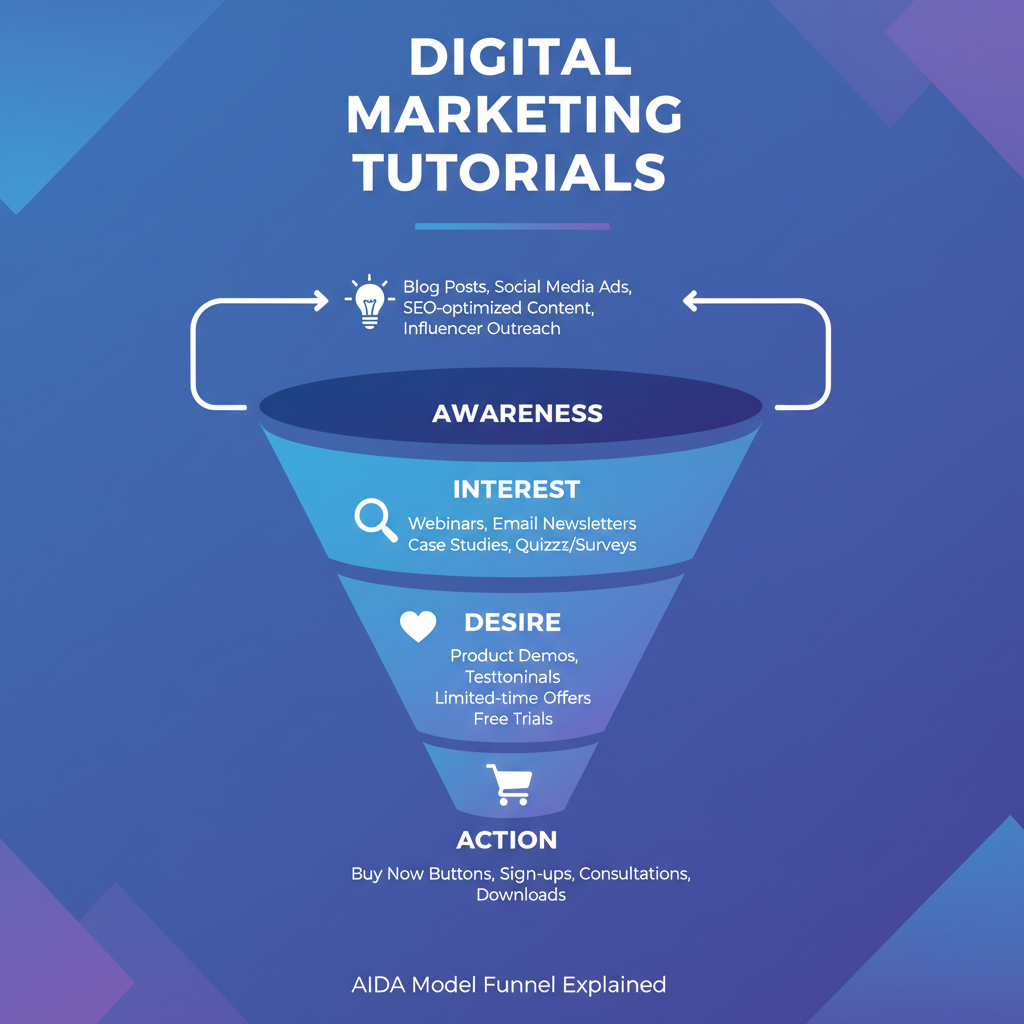
The AIDA model is a classic copywriting framework that’s perfect for structuring your content:
- Attention: Grab them with your powerful headline and hook.
- Interest: Hold their interest by sharing relatable stories, fascinating facts, and identifying their pain points.
- Desire: Create desire by showing them what’s possible. Paint a picture of their life after their problem is solved by your solution.
- Action: Clearly tell them what to do next with a compelling Call to Action (CTA).
Writing to a Single Person: The Power of “You” and “Your”
Stop writing for “an audience.” Write for one person. Picture your ideal customer and write directly to them. Use the words “you” and “your” frequently. This simple shift makes your writing feel personal and conversational, which is essential for building the trust needed for a conversion.
Using LSI Keywords Naturally to Enhance SEO and Readability
Remember that “Keyword Arsenal”? Now is the time to weave in those LSI (Latent Semantic Indexing) keywords like “customer pain points,” “buyer journey,” and “lead generation.” Don’t force them. Use them naturally to add context and depth to your writing. This tells search engines you’re covering the topic comprehensively and improves the overall quality of your content.
Step 4: Building Trust and Authority with E-E-A-T and Social Proof
People buy from businesses they trust. In the world of SEO, Google formalizes this concept with its E-E-A-T guidelines. Your content must demonstrate why you are a credible source of information.
Demonstrating Experience, Expertise, Authoritativeness, and Trustworthiness (E-E-A-T)
To create content that builds trust, you must:
- Show, don’t tell: Instead of saying “we are experts,” share specific case studies or personal experiences.
- Cite your sources: Link out to authoritative studies, reports, and industry leaders.
- Author bios: Include clear author information with credentials.
- Be transparent: Acknowledge limitations and present information fairly.
The Power of Testimonials, Case Studies, and User-Generated Content
Social proof is one of the most powerful psychological triggers for conversion. Let others sell for you. Sprinkle relevant testimonials and case studies throughout your content. Quoting a happy customer saying, “This strategy increased our leads by 150%,” is far more powerful than you making the same claim.
Step 5: The Conversion Catalyst: Irresistible Calls-to-Action (CTAs)
You’ve done all the hard work. You’ve attracted the right user, built trust, and created desire. The call to action is the final step that turns a passive reader into an active lead or customer. Don’t let it be an afterthought.
Writing Clear, Action-Oriented CTA Copy
Weak CTAs like “Click Here” or “Submit” won’t cut it. Your CTA copy needs to be specific and benefit-driven. Instead of “Download Now,” try “Get Your Free Conversion Checklist.” Instead of “Contact Us,” try “Request a Free Strategy Call.” Use strong action verbs and tell the user exactly what they’ll get.
Designing CTAs That Stand Out and Drive Clicks
Your CTA button should be impossible to miss. Use a contrasting color that pops against the background of your page. Ensure there’s plenty of white space around it. The best practice, supported by countless A/B tests, is to make your CTA look like a clickable button. A 2025 report from HubSpot confirmed that button-style CTAs outperform text-link CTAs by as much as 45%.
Step 6: Optimizing for the User Experience (UX) to Maximize Conversions
A poor user experience can kill your conversion rate, no matter how great your content is. If your site is slow, hard to read on mobile, or difficult to navigate, users will leave. UX and conversion are intrinsically linked.
The Role of Visual Content: Images, Videos, and Infographics
Visuals break up text, increase engagement, and can explain complex concepts more effectively than words alone. Use relevant, high-quality images, screenshots, and custom infographics to support your points. I’ve seen firsthand how embedding a short explainer video can double the time on page for a critical article.
Ensuring Mobile-Friendliness for On-the-Go Readers
Over 60% of web traffic now comes from mobile devices, according to data from Statista’s 2025 Mobile Economy Report. Your content must be perfectly readable and navigable on a small screen. This means responsive design, large fonts, and easily tappable buttons. Test your pages on your own phone before you hit publish.
Step 7: Measuring and Iterating: The Data-Driven Path to Higher Conversions
Creating content that converts isn’t a “set it and forget it” activity. It’s a process of continuous improvement fueled by data. What I find particularly interesting is how many marketers skip this final, crucial step.
Key Metrics to Track
Go beyond pageviews. Focus on metrics that indicate engagement and conversion:
- Conversion Rate: The percentage of visitors who complete your desired action.
- Time on Page: How long are people actually reading your content?
- Scroll Depth: How far down the page do users get? Are they seeing your CTAs?
- Click-Through Rate (on internal links/CTAs): Are people moving deeper into your funnel?

The Importance of A/B Testing Your Content and CTAs
Don’t guess what works—test it. Use tools to A/B test different headlines, CTA copy, button colors, and even article introductions. A small change, like altering one word in your headline, can lead to a significant lift in conversions. Let the data guide your optimization efforts.
Frequently Asked Questions About Content Conversion
How do you write content that converts?
You write content that converts by deeply understanding your audience’s pain points and search intent, structuring the content for scannability, using persuasive copywriting frameworks like AIDA, building trust with social proof and E-E-A-T signals, and finishing with a clear, compelling call-to-action.
What are the key elements of high-converting content?
The key elements are: a benefit-driven headline, an empathetic introduction, scannable body copy that solves a problem, credible evidence (stats, testimonials), strategically placed visuals, and a low-friction, high-value call-to-action.
How do you measure content conversion?
You measure content conversion using web analytics tools like Google Analytics. You set up specific goals or “conversion events” (e.g., a form submission, a download, or a purchase) and track the percentage of visitors from a specific piece of content who complete that action. This is your content conversion rate.
Why is understanding search intent crucial for conversion?
Search intent tells you the user’s goal. If you misalign your content with their intent (e.g., trying to sell to someone who just wants information), you create friction and lose their trust. Matching intent ensures you’re providing the right value at the right time, which is the foundation of conversion.
How do long-tail keywords improve conversion rates?
Long-tail keywords (3+ words) are highly specific. A person searching for “best running shoes for flat feet” is much closer to buying than someone searching for “shoes.” By targeting these specific phrases, you attract a more qualified audience that is further along in the buyer journey, leading to naturally higher conversion rates.
Your Blueprint for Results-Driven Content
Key Takeaways
- Start with Intent: Before anything else, master the user’s search intent and map your content to the buyer’s journey.
- Target Buying Keywords: Focus on long-tail keywords that signal commercial or transactional intent to attract qualified traffic.
- Structure for Scannability: Use clear headings, short paragraphs, and lists to make your content easy to digest.
- Write to Persuade, Not Just Inform: Employ copywriting techniques like the AIDA model and write directly to a single person.
- Build Unshakeable Trust: Leverage social proof and E-E-A-T principles to establish your authority and credibility.
- Measure and Optimize: Don’t guess. Use data and A/B testing to continuously improve your content’s performance.
Creating content that converts is a science, not an art. It’s a deliberate, strategic process that prioritizes the reader’s needs and guides them toward a solution. The days of writing content just to fill a calendar are over. By implementing the steps in this tutorial, you’re not just creating blog posts; you’re building powerful assets for your business.
The next step is to take action. Pick one piece of existing content and audit it against this framework. Or, use this blueprint for the very next article you write. The journey from traffic-generator to conversion-machine starts now.
The post Content that Converts: A Step-by-Step Tutorial appeared first on Petlg.
]]>The post The Ultimate Content Marketing Crash Course appeared first on Petlg.
]]>The Ultimate Content Marketing Crash Course: From Zero to Hero in 2025
In a digital world overflowing with ads, noise, and constant distractions, how do you capture genuine attention? How do you build a loyal audience that not only listens but trusts you enough to become customers? The answer isn’t a bigger ad budget or louder shouting. It’s about mastering content marketing.
You’ve probably heard the term, but you might be wondering, what is content marketing, really? And why is it so critical now? Here’s the thing: people are tired of being sold to. They’re actively looking for solutions, information, and entertainment. According to a 2025 HubSpot report, brand-led marketing is making a huge comeback, with nearly 38% of marketers prioritizing the customer experience and creating content that aligns with brand values. This is a fundamental shift from interruption to attraction.
In my years of experience in SEO and content strategy, I’ve seen firsthand how a well-executed content plan can transform a business from an unknown entity into a thought leader. The biggest mistake I see people make is jumping into content creation without a solid strategy, essentially throwing spaghetti at the wall and hoping something sticks. This crash course is designed to prevent that. We’re going to give you the foundational knowledge and actionable framework to develop, execute, and measure a successful content marketing program that drives tangible results. We’ll cover everything from understanding your audience and crafting a winning strategy to creating compelling content, promoting it effectively, and proving its value through data. Let’s get started.
The Core Principles of High-Impact Content Marketing
Before we dive into the “how,” it’s crucial to understand the “what” and the “why.” Content marketing isn’t just about blogging or posting on social media; it’s a strategic approach focused on creating and distributing valuable, relevant, and consistent content to attract and retain a clearly defined audience — and, ultimately, to drive profitable customer action.
What is Content Marketing and Why Does It Matter in 2025?
At its heart, content marketing is the art of communicating with your customers and prospects without selling. Instead of pitching your products or services, you are delivering information that makes your buyer more intelligent. The essence of this content strategy is the belief that if we, as businesses, deliver consistent, ongoing valuable information to buyers, they will ultimately reward us with their business and loyalty.
And it works. Data from the Content Marketing Institute in 2024 revealed that an astounding 87% of B2B marketers say content marketing created brand awareness in the last 12 months. This isn’t a passing trend; it’s the future. Worldwide content marketing revenue is projected to reach an incredible $107.5 billion by 2026, as reported by Digital Silk. If you’re not investing in content, you’re being left behind.
The Mindset Shift: From Selling to Helping
The most critical shift you must make is from a “selling” mindset to a “helping” one. Your audience has problems, questions, and goals. Your content should be their guide, their resource, their solution. When you consistently help them, you build trust. Trust is the foundation of any long-term business relationship. This is precisely why, according to Adam Connell, content marketing generates 3x as many leads as traditional marketing—it’s built on a foundation of value, not interruption.
The Inbound Methodology: Attract, Engage, and Delight
Content marketing is the engine of the inbound methodology. Instead of pushing your message out (outbound), you pull customers in (inbound) with content that is relevant and helpful. The process works in three stages:
- Attract: You draw in the right people with valuable content and conversations that establish you as a trusted advisor with whom they want to engage. Think blog posts, SEO, and social media.
- Engage: You present insights and solutions that align with their pain points and goals so they are more likely to buy from you. This includes email marketing, lead nurturing, and case studies.
- Delight: You provide help and support to empower your customers to find success with their purchase. This builds loyalty and turns customers into promoters. Think support articles, special offers, and community building.
Module 1: Building Your Strategic Foundation
A house built without a blueprint will crumble. The same is true for your content marketing. A documented strategy is the single most important factor separating effective content marketers from their less effective peers.
Defining Your “Why”: Setting Clear Goals and KPIs
What do you actually want to achieve? Without clear goals, you can’t measure success. Your goals should be S.M.A.R.T. (Specific, Measurable, Achievable, Relevant, Time-bound). Common content marketing goals include:
- Brand Awareness: Getting your name out there. Measured by website traffic, social media followers, and mentions.
- Lead Generation: Capturing contact information from potential customers. HubSpot’s 2025 data shows that 74% of marketers say content marketing helped generate demand/leads.
- Sales: Directly driving revenue. Over 41% of marketers measure content success through sales, according to a 2024 HubSpot State of Marketing Report.
- Customer Loyalty & Retention: Keeping existing customers engaged and happy.
- Thought Leadership: Establishing your brand as the go-to expert in your industry.
Know Your Audience: Creating Detailed Buyer Personas
You can’t create resonant content if you don’t know who you’re talking to. A buyer persona is a semi-fictional representation of your ideal customer based on market research and real data about your existing customers. Go beyond basic demographics. What are their goals? What challenges do they face? Where do they hang out online? What kind of content do they consume?
Case Study: HubSpot’s Content Machine
HubSpot is a masterclass in content marketing. They’ve built a multi-billion dollar company by providing immense value for free. By creating detailed personas like “Marketing Mary” and “Owner Ollie,” they tailor their content—from blog posts to free tools—to solve specific problems for their target audience, achieving a staggering 35% market share in marketing automation, as cited by Accio in 2025.
Mapping the Customer Journey: Content for Every Stage
A potential customer goes through several stages before making a purchase. Your content needs to meet them at each step:
- Awareness Stage (Top of Funnel): The buyer realizes they have a problem. Content here should be educational and high-level. Examples: Blog posts, infographics, short videos, checklists.
- Consideration Stage (Middle of Funnel): The buyer defines their problem and researches options to solve it. Content should be more in-depth and solution-oriented. Examples: E-books, webinars, case studies, comparison guides.
- Decision Stage (Bottom of Funnel): The buyer chooses a solution. Content should build confidence and make it easy to buy. Examples: Free trials, demos, customer testimonials, pricing pages.
Module 2: The Art and Science of Content Creation
With a solid strategy in place, it’s time to create the content that will attract and engage your audience. This is where creativity meets data.
Ideation and Topic Clustering: Never Run Out of Ideas
The “topic cluster” model is a game-changer for content planning and SEO. Instead of writing random blog posts, you create a central “pillar” page on a broad topic and then create multiple “cluster” content pieces that link back to the pillar page. This signals to Google that you have deep authority on that topic. To find ideas, use keyword research tools, browse competitor sites, check forums like Reddit and Quora, and most importantly, listen to your customers’ questions.
The Power of Storytelling: Crafting Narratives That Resonate
Facts tell, but stories sell. Humans are wired for narrative. The most effective content marketing doesn’t just list features; it tells a story. The “Share a Coke” campaign is a legendary example. As noted by Dia Creative, by personalizing bottles with names, Coca-Cola created millions of micro-stories, driving massive user-generated content and reviving the brand. Your content should have a clear beginning (the problem), middle (the journey to the solution), and end (the successful outcome).
Finally, a sensible writing guide for a digital age! … You’ll be a better writer by page 15.
– Jay Baer, President, Convince & Convert, on Ann Handley’s “Everybody Writes”
Content Formats That Convert: Blogs, Videos, Podcasts, and More
Don’t put all your eggs in one basket. Different people prefer different formats. In 2025, diversity is key.
- Short-Form Video: This is the undisputed champion of engagement. A 2025 HubSpot report identifies it as the leading format, with 17.13% of marketers planning to increase investment.
- Blogging: Still the cornerstone of content marketing and SEO. High-quality, long-form articles establish authority and rank well.
- Infographics: Perfect for visualizing data and complex information. In fact, 88% of marketers plan to increase or maintain their investment in infographics, according to HubSpot Blog Research from 2024.
- Podcasts & Webinars: Excellent for deep dives and building a personal connection with your audience.
Leveraging AI in Content Creation (Ethically and Effectively)
AI is no longer a futuristic concept; it’s a content marketer’s co-pilot. But here’s my take: AI should be used for augmentation, not replacement. Use it to brainstorm ideas, create outlines, polish grammar, and analyze data. A 2024 report from Semrush found that 67% of small business owners and marketers use AI for content marketing or SEO, and 77% agree it helps them create better, more personalized content. The human touch—your unique perspective, experience, and storytelling—is what will always set your content apart.
Module 3: SEO for Content Marketers: Getting Found on Google
Creating amazing content is only half the battle. If no one can find it, it might as well not exist. This is where Search Engine Optimization (SEO) becomes your best friend.
Keyword Research for Audience Intent
Keyword research isn’t about stuffing your page with terms. It’s about understanding the language your audience uses and the *intent* behind their searches. Are they looking for information (“what is content marketing?”), comparing options (“hubspot vs mailchimp”), or ready to buy (“hire content marketing specialist”)? Tools like Semrush, Ahrefs, and even Google’s free Keyword Planner can help you find these opportunities.
On-Page SEO Essentials for Every Piece of Content
On-page SEO refers to optimizing individual web pages to rank higher and earn more relevant traffic. It’s a non-negotiable checklist for every piece of content you publish:
- Title Tag: The headline that appears in search results. Make it compelling and include your primary keyword.
- Meta Description: The short summary under the title tag. It doesn’t directly impact rankings, but a good one increases click-through rates.
- Header Tags (H1, H2, H3): Use them to structure your content logically. Your H1 is your main title, and H2s/H3s are subheadings.
- Clean URL: Make your URL short, descriptive, and include your keyword (e.g., `yourdomain.com/content-marketing-crash-course`).
- Image Alt Text: Describe your images for search engines and visually impaired users.
Building Authority with Backlinks and Internal Linking
Internal Links are links from one page on your site to another. They help Google understand your site structure and establish a hierarchy of importance. They also keep users on your site longer.
Backlinks are links from other websites to yours. They are one of the most powerful ranking factors because they act as a “vote of confidence” from other sites. You can earn them naturally by creating exceptional, link-worthy content (often called “link bait”) or by actively reaching out to other site owners and journalists.
Module 4: Content Distribution and Promotion: Amplifying Your Reach
Don’t just hit “publish” and pray. Promotion is what separates content that gets seen from content that gets buried. I recommend an 80/20 rule: spend 20% of your time creating content and 80% promoting it.
Owned, Earned, and Paid Media Strategies
- Owned Media: Channels you control. This is your website, blog, email list, and social media profiles. This is your foundation.
- Earned Media: When others talk about you. This includes press mentions, social media shares, reviews, and backlinks. It’s the digital word-of-mouth you build by creating great content.
- Paid Media: Paying to promote your content. This includes social media ads, search engine marketing (SEM), and influencer marketing. It’s a great way to kickstart visibility for a new piece of content.
The Art of Repurposing Content for Maximum Impact
Don’t be a content one-hit-wonder. Take a single, high-value piece of content and repurpose it into dozens of different formats. A long-form blog post can become:
- An infographic
- A series of short-form videos for TikTok and Reels
- A Twitter thread
- A LinkedIn carousel post
- A podcast episode
- Slides for a webinar
Case Study: GoPro and User-Generated Content (UGC)
GoPro has built an empire on earned and repurposed media. As Accio points out, by encouraging their customers to upload and share their adventure videos, they get an endless stream of authentic, high-quality, and free marketing material. They then feature the best videos on their social channels and in commercials, creating a powerful community and content engine.
Building a Community Around Your Content
Content marketing isn’t a monologue; it’s a conversation. Engage with comments on your blog and social media. Create a Facebook group or Slack channel for your most dedicated fans. When you build a community, you create a loyal following that will not only consume your content but actively help you promote it.
Module 5: Measuring What Matters: Data, Analytics, and ROI
If you can’t measure it, you can’t improve it. Data is the compass that tells you if your content strategy is on course.
Key Content Marketing Metrics to Track
Don’t get lost in vanity metrics. Focus on data that ties back to your business goals:
- Traffic: Pageviews, unique visitors. Where is it coming from (organic, social, referral)?
- Engagement: Time on page, bounce rate, social shares, comments. Are people actually consuming your content?
- Conversions: Lead form completions, newsletter sign-ups, demo requests. Is your content driving action?
- SEO Performance: Keyword rankings, backlinks earned. Are you gaining visibility in search?
- Revenue: The ultimate metric. Can you attribute sales directly to your content efforts?
Using Google Analytics to Understand Your Audience
Google Analytics is a free, powerful tool that should be your first stop for data. You can see which pages are most popular, understand your audience demographics, track user behavior on your site, and set up goals to measure conversions. Spend time learning its features; the insights are invaluable.
Attributing ROI to Your Content Marketing Efforts
Proving Return on Investment (ROI) can be tricky but is essential for getting buy-in and budget. A simple way to start is to calculate it like this:
(Return from Content – Cost of Content) / Cost of Content = ROI
To find the “Return,” you’ll need to track how many leads your content generates and what percentage of those leads become customers. For many businesses, content is a long-term play. As Peter Boyd of Forbes wisely notes, “success in content marketing is not about quick wins but about building long-term relationships with your audience.”
Frequently Asked Questions About Content Marketing
How long does it take to see results from content marketing?
Content marketing is a marathon, not a sprint. While you might see some early traffic boosts, it typically takes 6-12 months of consistent, high-quality effort to see significant results in terms of organic traffic, lead generation, and ROI.
How often should I be publishing new content?
Consistency is more important than frequency. It’s better to publish one amazing, in-depth article per week than five mediocre ones. Start with a schedule you can realistically maintain and focus on quality above all else.
What’s the difference between content marketing and social media marketing?
Content marketing is the umbrella strategy of creating valuable assets (blogs, videos, ebooks). Social media marketing is primarily a distribution channel for that content and a platform for engaging with your community.
Can I do content marketing with a small budget?
Absolutely. Your biggest investment will be time. You can write blog posts, use free tools like Canva for visuals and Google Analytics for data, and promote your content on social media without spending a dime. Thirty-nine percent of enterprise marketers expect their content marketing budgets to increase in 2025, according to the Content Marketing Institute, but you can start small and scale up.
What are the best content marketing tools for beginners?
For beginners, I recommend: Google Docs (writing), Grammarly (editing), Canva (visuals), Google Analytics (data), and a free keyword research tool like Ubersuggest or Google Keyword Planner.
How do I find my target audience?
Start by analyzing your current customers. Survey them. Look at your website and social media analytics to understand demographics and interests. Research competitors to see who they are targeting. This data will form the basis of your buyer personas.
What makes content “high-quality”?
High-quality content is comprehensive, well-researched, accurate, engaging, and solves a specific problem for the reader. It should be original, provide a unique perspective, and be free of grammatical errors.
Should I gate my content?
Gating content (requiring an email address to access) is best for high-value, middle-of-funnel assets like ebooks, webinars, and detailed guides. Top-of-funnel content like blog posts should remain open to attract the widest possible audience.
How do I build an email list with content marketing?
Offer valuable lead magnets (checklists, templates, ebooks) in exchange for an email address. Include clear calls-to-action (CTAs) within your blog posts and on your website to encourage sign-ups for your newsletter.
What is a content audit and why is it important?
A content audit is the process of systematically reviewing all the content on your website. It’s important for identifying what’s working, what’s outdated, what can be improved or updated (“content pruning”), and where you have gaps in your content strategy.
How does visual content impact marketing effectiveness?
It has a massive impact. Visuals like videos and infographics make content more engaging, shareable, and easier to understand. According to ON24, in 2024, more than 89% of consumers confirmed they want to see more videos from brands, a figure that will likely grow in 2025.
What role do influencers play in content marketing?
Influencers can be powerful distribution partners. Collaborating with them can expose your content to a new, relevant audience, building trust and driving traffic. According to a 2025 report from HubSpot, influencer collaborations are delivering some of the highest ROI for marketers.
How can I stay up-to-date with content marketing trends?
Follow leading industry blogs like the Content Marketing Institute, HubSpot, and Semrush. Listen to marketing podcasts. Participate in webinars and online communities. The field is always changing, so continuous learning is key.
Is blogging still relevant for content marketing?
Yes, 100%. Blogging remains the foundation of a strong SEO and content marketing strategy. It’s the best way to consistently publish long-form, keyword-rich content that attracts organic traffic and establishes your brand as an expert.
What is “evergreen content”?
Evergreen content is content that remains relevant and valuable for a long time after its publication, with minimal updates required. Think “how-to” guides, ultimate guides, and foundational explainers. It’s a powerful asset that can drive traffic and leads for years.
How do you develop a consistent brand voice?
Create a brand style guide that defines your tone (e.g., professional but witty), personality traits (e.g., helpful, innovative), and specific grammar/style rules. Share this guide with everyone who creates content for your brand to ensure consistency.
What are the legal aspects of content marketing I should know?
Key legal aspects include copyright law (don’t use images or text without permission), disclosures for sponsored content (FTC guidelines), and data privacy laws like GDPR and CCPA if you are collecting user information.
How can I use content marketing for e-commerce?
E-commerce content marketing is huge. You can create detailed buying guides, product tutorials (video is great for this), user-generated content campaigns with customer photos, and blog posts that solve problems related to your products.
What is interactive content and why should I use it?
Interactive content is any content that requires the participant’s active engagement. Examples include quizzes, calculators, polls, and assessments. It’s highly effective because it’s more engaging than passive content, provides personalized value, and is great for capturing lead data.
How do I get buy-in for a content marketing strategy from my boss?
Present a clear, data-driven plan. Start with the “why”—the business goals it will achieve. Show them competitor analysis. Create a detailed budget and project the potential ROI based on industry benchmarks, like the fact that 58% of B2B marketers reported increased sales in 2023 thanks to content marketing, per the Content Marketing Institute. Start small with a pilot project to prove its value.
Your Journey Starts Now
We’ve covered a tremendous amount of ground, but the core of effective content marketing is refreshingly simple. It boils down to five key pillars:
- Strategy: Know your audience, your goals, and your “why.”
- Creation: Produce valuable, high-quality content that helps and tells a story.
- Optimization: Make it easy for search engines and people to find your content.
- Promotion: Actively distribute your content where your audience spends their time.
- Measurement: Use data to understand what’s working and prove your value.
From my perspective, the real game-changer is the shift in mindset from selling to serving. When you genuinely commit to helping your audience solve their problems, the traffic, leads, and sales will follow. Don’t feel overwhelmed. Start by creating your first buyer persona or writing your first pillar page. The journey to becoming a content hero begins with a single, strategic step. Start building your content marketing plan today.
The post The Ultimate Content Marketing Crash Course appeared first on Petlg.
]]>The post Content is King: Learn to Write for Engagement appeared first on Petlg.
]]>Content is King: Your Ultimate Guide to Writing for Unstoppable Engagement
In a world saturated with digital noise, how do you create something that doesn’t just get seen, but gets felt? You’re competing with millions of blog posts, videos, and social media updates every single hour. The sheer volume can feel overwhelming. I know this because I’ve spent years in the trenches, seeing businesses pour resources into content that vanishes without a trace. The pain point is real: you’re creating, but nobody is connecting.
The answer isn’t about shouting louder; it’s about speaking more clearly and with more value. It lies in a timeless marketing principle: Content is King. From my perspective, this isn’t just a catchy phrase; it’s the foundational law of the digital universe. This guide will equip you with the strategies and data-backed insights to transform your content from a mere commodity into a powerful engine for audience engagement, trust, and business growth.
We’re going to dissect this principle from the ground up. We will explore the enduring relevance of “Content is King,” deconstruct the anatomy of truly engaging content, and provide a step-by-step framework for creating articles that dominate SERP rankings and build a loyal, thriving community around your brand.
The Enduring Reign of “Content is King” in the Digital Age
The phrase might seem like a relic from the early days of the internet, but its relevance has only intensified. Let’s explore why this mantra remains the cornerstone of any successful digital marketing strategy.
The Origin and Evolution of a Marketing Mantra
Coined by Bill Gates in a 1996 essay, the idea that “Content is King” was prophetic. He envisioned a future where the primary value of the internet would be the information it provided. Decades later, his prediction has been validated tenfold. Initially, it was about simply having content. Now, it’s about having the best, most valuable, and most engaging content. The kingdom has grown, and so have the standards for ruling it.
“Content is the atomic particle of all digital marketing.”
Why Quality Content Remains the Cornerstone of SEO
Search engines like Google have one primary goal: to provide the most relevant and helpful answer to a user’s query. Their algorithms have evolved to prioritize content that demonstrates expertise, authoritativeness, and trustworthiness (E-A-T). Here’s the thing: you can’t fake this. High-quality, SEO content writing isn’t about stuffing keywords; it’s about comprehensively answering questions, providing unique insights, and creating a positive user experience. When you do that, search engines reward you with higher SERP rankings and more organic traffic.
The Symbiotic Relationship Between Content and User Experience
Great content and a great user experience are two sides of the same coin. Think about it. If your article is a dense wall of text, difficult to navigate, and slow to load, even the most brilliant information will be ignored. Modern content optimization involves more than just words; it includes structure, readability, mobile-friendliness, and the seamless integration of visual content. A positive user journey keeps people on your page longer, signals value to search engines, and makes them more likely to return.
The Anatomy of Engagement: What Truly Captivates Your Audience
Creating content is easy. Creating content that people actually want to read, share, and act on is an art. It’s about understanding human psychology as much as it is about grammar and keywords. So, what are the elements of high-quality content that make it magnetic?
The Power of Storytelling and Emotional Connection
Facts tell, but stories sell. Our brains are hardwired for narrative. Brand storytelling transforms abstract data and features into relatable human experiences. It’s the difference between listing a product’s specs and showing how that product solved a real person’s problem. You don’t have to be a novelist, but you do need to frame your information within a structure that has a beginning, a middle, and an end. It’s about building a bridge between your message and the reader’s own life.
“Good content isn’t about good storytelling. It’s about telling a true story well.”
Simplicity and Clarity: Writing for a Skimming Audience
Here’s a hard truth: most people don’t read online; they skim. In my experience working with clients, the biggest mistake I see them make is writing dense, academic paragraphs. You need to write for the skimmer. This means using:
- Short sentences and paragraphs.
- Clear, bold headings (H2s and H3s).
- Bulleted and numbered lists.
- Bold text to emphasize key points.
This isn’t about “dumbing down” your content. It’s about respecting your reader’s time and making your valuable information as accessible as possible.
The Role of Visuals: Infographics, Images, and Videos
Visual content isn’t just a decoration; it’s a vital part of communication. The human brain processes images 60,000 times faster than text. Integrating high-quality images, infographics, charts, and videos can break up text, illustrate complex points, and dramatically increase engagement. When explaining data, a simple chart is often more powerful than three paragraphs of text.
A Strategic Framework for Creating High-Engagement Content
Great content doesn’t happen by accident. It’s the result of a deliberate, strategic process. Let’s walk through a repeatable framework for building content that consistently performs.
Step 1: Deep Dive into Audience and Keyword Research
Before you write a single word, you must know who you’re writing for and what they’re searching for. This involves creating detailed buyer personas and conducting thorough keyword research. You need to understand their pain points, their questions, and the language they use. Tools like Ahrefs, SEMrush, and even Google’s “People Also Ask” section are invaluable for uncovering the topics your audience cares about.
Step 2: Crafting Compelling Headlines and Hooks
Your headline is the single most important part of your content. It’s the gatekeeper. An amazing article with a boring headline will never get read. A great headline makes a promise, sparks curiosity, or speaks directly to a reader’s need. Once they click, your opening paragraph—your hook—must immediately confirm they’re in the right place and give them a compelling reason to keep reading.
Step 3: Structuring Your Content for Readability and Flow
A logical structure is your reader’s roadmap. Start with a broad introduction, move into detailed points in the body (using H2s and H3s to create a clear hierarchy), and finish with a strong conclusion. Think of it as an inverted pyramid: start with the most important information and then drill down into the details. This structure not only helps readers but also helps search engines understand the key topics of your page.
Step 4: The Art of the Call-to-Action (CTA)
Every piece of content should have a purpose. What do you want the reader to do next? Your call-to-action should be clear, concise, and relevant to the content they just consumed. Whether it’s to leave a comment, read another article, or subscribe to a newsletter, guide your reader on the next step of their customer journey with you.
Leveling Up Your Content: Advanced Engagement Tactics
Once you’ve mastered the fundamentals, you can start incorporating more advanced techniques to make your content truly stand out.
The Rise of Interactive Content: Quizzes, Polls, and Calculators
Static content is a one-way street. Interactive content starts a conversation. Quizzes, polls, calculators, and assessments transform passive readers into active participants. The data on this is compelling. A 2024 article from Forbes notes that “interactive content generates 52.6% higher engagement rates than content that is static.” Another report from Eventflare in December 2024 found it can generate up to 80% higher engagement. I believe the real game-changer here is that it provides personalized value, which is incredibly powerful.
Leveraging Data and Statistics for Credibility
Using specific, verifiable data builds immense trust and authority. Instead of saying “content marketing is effective,” state a concrete result. For instance, an analysis by Digital Specialist Co. on January 29, 2025, revealed a compelling case study where “Fisher Tank saw a 119% increase in website traffic, a 500% boost in quote requests, and shorter sales cycles” through their content strategy. Citing your sources makes your claims credible and your content a reliable resource.
The Importance of Internal Linking for a Cohesive User Journey
Internal linking is one of the most underrated SEO and user engagement tactics. By linking to other relevant articles on your site, you create a cohesive user journey, keeping visitors on your site longer and guiding them through a “topic cluster.” This signals to Google that you have deep authority on a subject and provides immense value to the reader by helping them discover more of your helpful content.
Measuring Your Success: Key Metrics for Content Engagement
If you’re not measuring, you’re just guessing. To prove the value of your content, you need to track the right user engagement metrics and tie them back to your business goals.
Beyond Page Views: Understanding Time on Page and Bounce Rate
Page views can be a vanity metric. What’s more important is what people do after they land on your page. Time on Page tells you how long they’re actually reading. A high bounce rate might indicate your content didn’t match the search intent. These metrics give you a much clearer picture of whether your content is truly engaging.
Social Shares, Comments, and Backlinks as Engagement Signals
These are the ultimate votes of confidence. When someone shares your content, leaves a thoughtful comment, or links to it from their own website, they’re telling the world (and search engines) that your content is valuable. These are powerful social proofs and critical signals for building topic authority.
“Content builds relationships. Relationships are built on trust. Trust drives revenue.”
Tying Content Performance to Business Goals and ROI
Ultimately, your content marketing strategy needs to impact the bottom line. It’s about measuring the ROI of content marketing. The same Digital Specialist Co. report highlighted how Neutrogena’s data-driven content campaign led to a “289% improvement in Return on Ad Spend (ROAS).” By tracking conversions, leads generated, and sales influenced by your content, you can prove its immense value to your organization.
The Future of Content in a Post-AI World
The conversation around content is rapidly changing with the rise of AI. But what I want you to remember is this: tools change, but principles endure.
How AI is Reshaping Content Creation and Strategy
AI can be a powerful assistant for brainstorming ideas, generating outlines, and even drafting initial text. It can analyze vast amounts of data to help with keyword research and content gap analysis. Smart marketers will leverage AI to become more efficient, not to replace their critical thinking and creativity.
The Enduring Value of Human Creativity and Authenticity
AI cannot replicate genuine human experience, empathy, or unique perspective. It can’t tell your brand’s true story. In a world potentially flooded with generic AI-generated content, authentic, human-created content will become more valuable than ever. Your unique voice, personal anecdotes, and genuine opinions are your greatest competitive advantage.
“Our job is not to create content. Our job is to change the world of the people who consume it.”
Preparing Your Content for the Next Wave of Digital Innovation
The future of content marketing is about becoming more human, more personalized, and more interactive. This means optimizing content for voice search, embracing video and other rich media formats, and focusing relentlessly on providing genuine value. The core principle of “Content is King” will remain, but the way we express our reign will continue to evolve.
Frequently Asked Questions
What does the phrase “Content is King” mean?
It means that high-quality, relevant, and valuable content is the most important factor for success in digital marketing. It’s the foundation for SEO, audience engagement, and building brand trust.
How can I make my writing more engaging?
Use storytelling, address the reader directly (“you”), ask questions, use short sentences and paragraphs, and break up text with visuals, headings, and bullet points. Focus on solving a specific problem for your reader.
What is the ideal length for a blog post?
It depends on the topic and search intent. The ideal length is however long it takes to comprehensively answer the reader’s question. For competitive keywords, long-form content of 2,000+ words often performs best, but for simple queries, a few hundred words might suffice.
How do I find out what my audience wants to read?
Conduct keyword research, browse forums like Reddit and Quora, analyze your competitors’ top-performing content, survey your existing customers, and pay attention to the questions people ask on social media.
What are LSI keywords and why are they important?
LSI (Latent Semantic Indexing) keywords are terms and phrases that are semantically related to your main keyword. They help search engines understand the context and depth of your content, which is crucial for achieving high SERP rankings.
Conclusion: Your Reign Awaits
We’ve covered a lot of ground, but the central message is simple. While the digital landscape is in a constant state of flux, with new technologies and platforms emerging every year, the core principle of providing valuable, engaging, and human-centric content remains the undisputed key to online success. “Content is King” isn’t just a slogan; it’s a commitment to your audience.
Here are the key takeaways to remember:
- Strategy First: Great content begins with deep research into your audience and a clear understanding of their needs.
- Engagement is Human: Connect through storytelling, write with clarity, and use visuals to make your information digestible and memorable.
- Value is Non-Negotiable: Every piece of content you create must aim to be the best, most helpful resource for your reader on that topic.
- Measure What Matters: Look beyond vanity metrics to understand how your content is truly performing and driving business results.
The next step is to apply these strategies. Don’t just create content; craft experiences. Don’t just inform; inspire action. Start with your next article. Focus on providing overwhelming value, and you will build a kingdom of loyal followers who trust your brand and champion your message.
The post Content is King: Learn to Write for Engagement appeared first on Petlg.
]]>